When Your Mind Won't Stop Racing, Emptying It Is the Wrong Move
A thousand thoughts running through your head, one pulling the next behind it, all day long. "I shouldn't have said that." "Can I actually get that done tomorrow?" "What am I even making for dinner?"
When the thoughts pile up like this, most people try to fight them off — okay, stop thinking about it, I need to clear my head. But oddly enough, the harder you try not to think, the sharper those thoughts get, and all you're left with is a tired brain.
People who are good at handling this don't try to force their mind empty when it gets loud. They do something else instead.
Why trying to empty your mind backfires
Holding your mind in a state of "not thinking about anything" is genuinely hard to do. It's the same effect as being told don't think about an elephant — and suddenly there's nothing but elephants in your head.
The moment you try to push a thought out, your brain generates a new thought on top of it — I'm not supposed to be thinking about this — and now you're carrying two.
What actually matters isn't erasing the thought. It's stepping back and simply noticing that it arrived, like a bystander.
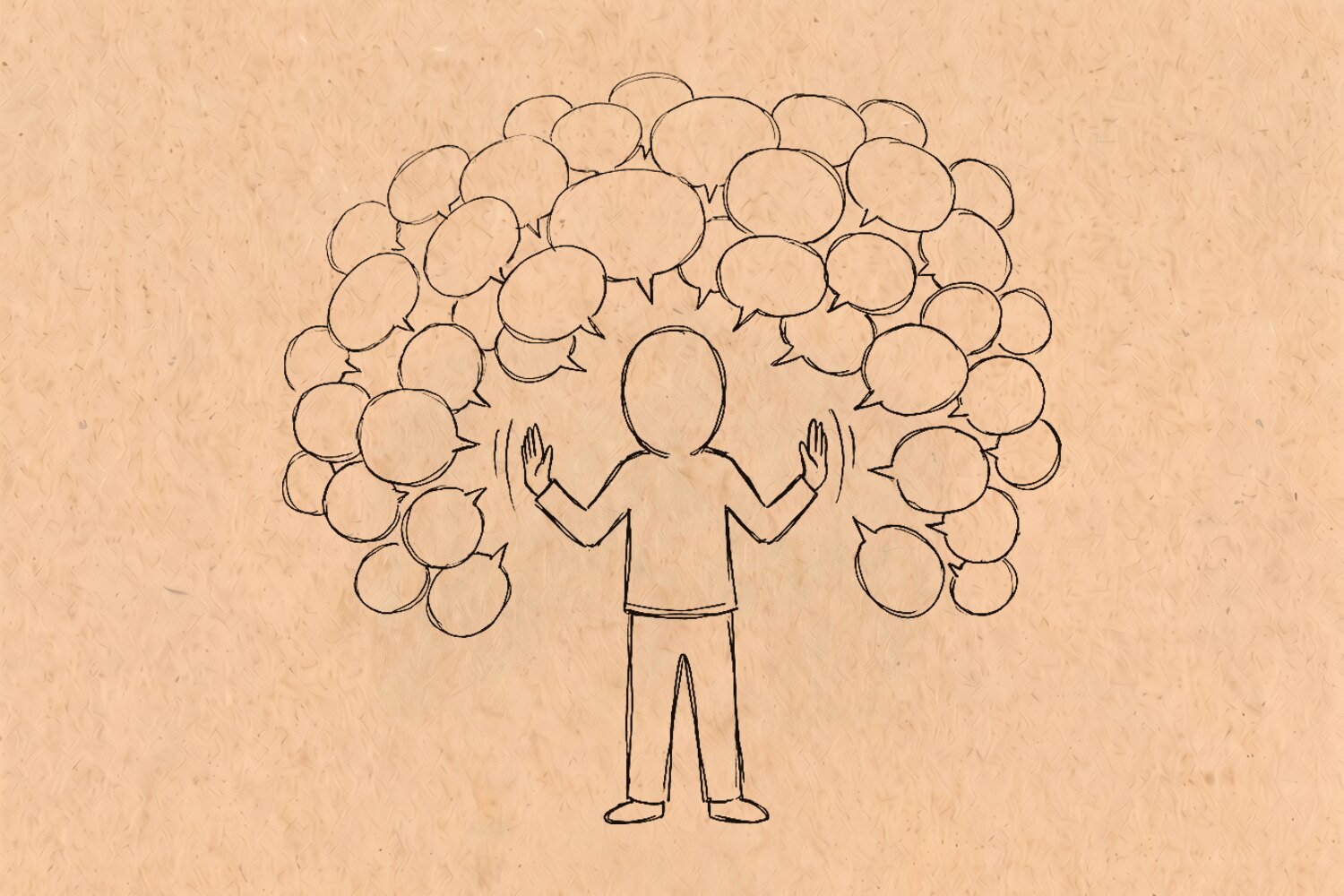
Three things that change once you start noticing your thoughts
Noticing a thought isn't the same as getting rid of it. It's stepping back far enough to see what just showed up in your head. Just catching yourself thinking there I go again, worrying about nothing — that alone changes more than you'd expect.
- It slows down the spiral. A gap opens up between you and the thought, so anxiety or anger doesn't take over the instant it arrives.
- It interrupts habits you don't even notice. When you're stressed, reaching for your phone or drifting into some distraction happens before you've decided anything. Noticing puts a moment in front of that reflex, and a moment is enough to stop.
- It saves energy. Cutting off pointless rumination can ease the kind of mental fatigue that builds up day after day.
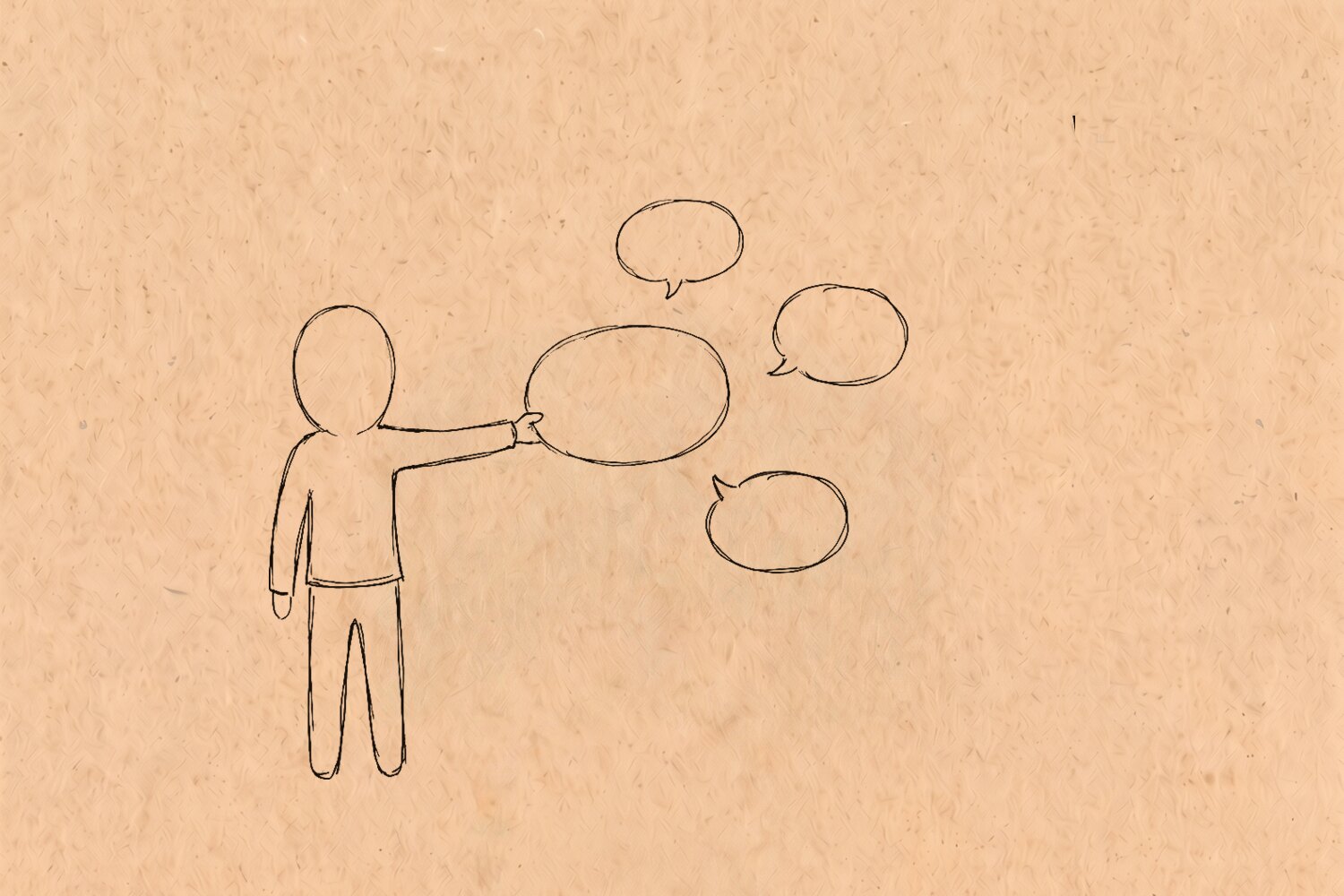
So why does training this skill keep falling apart?
The most common way people train this noticing is mindfulness meditation. But the moment you actually try it, you hit a different wall.
- "I close my eyes and I'm three seconds in before my mind wanders. Maybe I'm just not built for this."
- "I have no idea if I'm doing it right."
- "I had so many stray thoughts I figured meditation just wasn't for me, and I gave up."
The idea that meditation means an empty, silent head is wrong to begin with. And on top of that, there's no way to tell whether you're doing it right. Most people quit somewhere in there.
You don't have to do this on your own
You don't need iron focus or some complicated setup to start noticing your thoughts. True Meditation is made for the days your head won't quiet down.
- Open the app, and breathe while double-tapping the screen. It's mindfulness meditation, plus one extra motion — that double-tap.
- The moment your mind wanders and the rhythm of your tapping breaks, a soft vibration on your phone marks it. Catching that exact instant is the hardest part of meditation, and it's the part the app helps with — you're still the one who notices and comes back.
- Something worth keeping. Each session leaves behind a card: today's minutes, your breath count. You can lay it over your own photo or video in HDR and share it. A log you build for yourself, one small proof of having shown up.
When your head is loud, open True Meditation and breathe with it for a few minutes. The vibration marks the moments you drift, so you're not left guessing.
In short
Trying to empty your mind doesn't work — the instant you push a thought away, a new thought (I shouldn't be thinking this) piles on top of it. The shift isn't erasing thoughts. It's noticing they showed up at all.
Noticing opens a gap between you and the thought. With that gap, anxiety and anger don't take over as fast, and the habits stress usually triggers — reaching for your phone, finding a distraction — get a moment where you can choose not to follow them.
Mindfulness meditation is the training for that noticing. Alone, it's hard to catch the exact moment your mind wandered, and there's no way to check you're doing it right, which is why most people quit early. True Meditation has you tap the screen in time with your breath, and a vibration marks the moment that rhythm breaks.
True Meditation: Mindfulness is not an app you listen to. It's an app for doing mindfulness meditation yourself — the training of noticing your own thoughts, built into an app. It's free on the App Store and Google Play.